

The Non-Negotiables Audit
What they are, why they matter, and what to do when they quietly fall off the face of the earth

Hey gang,
When life gets full - bigger responsibilities, less time - I’ve found it’s surprisingly easy to quietly stop showing up for yourself. Not dramatically. Just a slow, barely-noticeable drift away from the small things that keep you functioning at your best.
The antidote? Non-negotiables. A short, personal list of the behaviours that, when they’re in place, make everything else work better.
Here’s the audit I use to identify mine - and come back to them when life (regularly) has other plans…
Part One: What are non-negotiables?
I’m 99% sure I first encountered the idea of “non-negotiables” from the inimitable Patti Stanger on Bravo’s The Millionaire Matchmaker.
(As a former reality TV development producer, I consumed an unreasonable amount of reality TV growing up - and I’m not embarrassed to admit, a surprising amount of it has proven useful.)
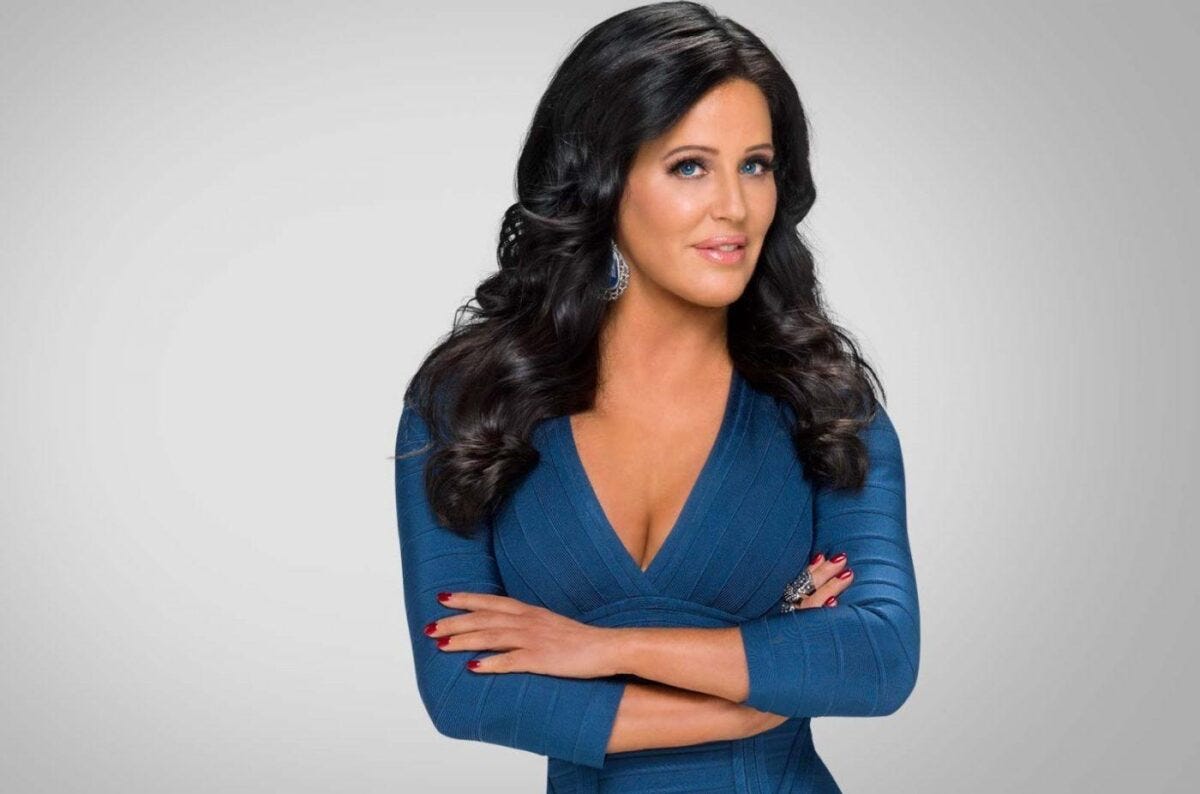
If you haven’t watched the show (firstly, WHAT were you doing with your life?), the premise was simple: Patti would take her wildly rich, wildly particular clients and force them to cut their long, unrealistic romantic wish lists down to five non-negotiables.
Not superficial preferences.
Not nice-to-haves.
What do they actually need?
(Spoiler: it wasn’t “dark features” or “over 6 foot.” It was values. Life decisions. The things that actually determine whether a partnership works long term.)
That idea extends well beyond dating - and honestly, it’s got nothing to do with grand gestures or big life decisions.
In the context of everyday life, non-negotiables are the small, unglamorous habits and routines that quietly keep everything else working. Not your ambitions or your goals - more like the baseline behaviours that, when they’re in place, mean you navigate the busy, autopilot phases of life feeling like yourself.
Pulitzer Prize-winning author Charles Duhigg calls them keystone habits: the few foundational behaviours that create a ripple effect across everything else.
When they’re in place, things tend to quietly go right.
When they’re not, things tend to quietly go wrong.
Not instantly. Not dramatically. Just… over time.
The catch? No one can hand you your list.
In my humble opinion, non-negotiables are deeply personal and contextual. What one person needs to feel like their best self will be completely different to another.
Which means the real work - and the real opportunity - is figuring out what yours are.
Part Two: How do you determine your non-negotiables?
When I’m trying to identify my own, the most useful question isn’t what I should be doing every day.
(It’s a tempting question. It’s also usually the wrong one.)
It’s this:
What are the things that, when I skip them for a few days, everything starts to feel slightly… off?
They’re often easier to spot in hindsight.
And working from absence rather than aspiration tends to be far more honest.
To make this practical, I like to sense-check across five core areas of life:
Physical: how I feel in my body: energy, sleep, movement
Mental: what I’m consuming and thinking about: clarity, headspace
Relational: who I’m connected to: the people who make me feel like yourself
Functional: what’s quietly piling up (deeply unglamorous, but wildly important)
Directional: what’s moving me forward (even in small, imperfect ways)
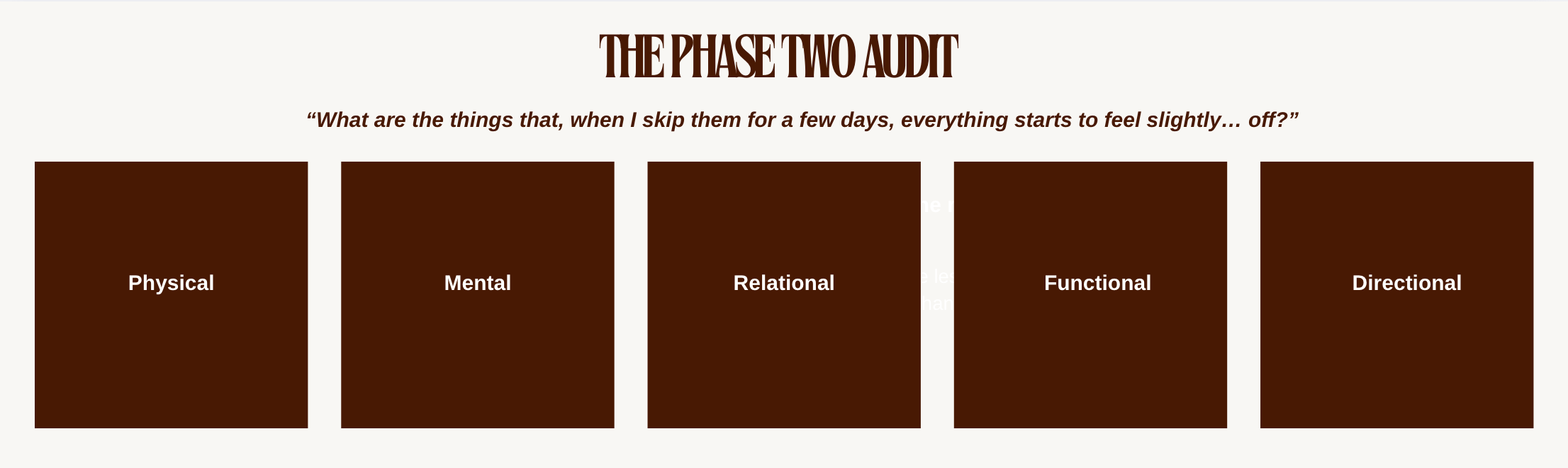
You don’t need one in every category.
You might have a cluster - and that’s the point.
The goal isn’t to build a perfect routine.
It’s to identify a small number of things that disproportionately affect how you feel, function, and show up.
Mine are embarrassingly simple:
Movement + eating relatively well
Consuming something that expands my brain (news, podcasts, reading)
Being proactive with friends, families, & hobbies
Doing one piece of life admin + resetting the house
Miss those for a few days, and I feel it almost immediately.
Not dramatically. Just… slightly off.
And then - this is the crucial bit -
you need to define the minimum viable version of each.
Think of it like a minimum viable product: the simplest version that still works.
For me:
Not 10,000 steps → 10 minutes of focused movement (yes, sometimes squats in the bathroom)
Not a full “reset” → one admin task
Not an hour of reading → one article
The smallest version you can return to on your busiest, messiest days.
Because once you know that, you don’t need motivation. You just need a way back.
Part Three: How do you actually make them happen (and what happens when you don’t)?
Firstly, a reality check. Habits take longer to stick than we think.
Research from Phillippa Lally at University College London found it takes, on average, around 66 days for a behaviour to become automatic.
Personally, that’s longer than I’d like to admit. But it explains a lot.
Which means in the early days, you can’t rely on autopilot. You need support.
Two simple tools that actually help: stacking and tracking.
Stacking: attach your habit to something that already exists
(coffee → no phone, daycare drop-off → short walk)Tracking: nothing fancy - just a visible tick on a page
(this is less about perfection & more about awareness)
Because until something becomes automatic, it needs to feel seen.
And then - the rule that matters most.
Atomic Habits author James Clear calls it: never miss twice. (Simple. Slightly annoying. Very effective.)
One missed day doesn’t matter. Two is where the slide begins.
So when life inevitably gets in the way (and it will), don’t spiral.
Just return - using your minimum viable version.
Not the full workout - the walk.
Not the perfect routine - one small action.
BJ Fogg’s research backs this: the habits that stick aren’t the ambitious ones.
They’re the small ones, done consistently.
If you fall off completely? Come back to your list.
Not a new one. Not a better one. This one.
And finally - don’t do this in isolation.
If you’re in the trenches, it helps to have someone who understands the reality of your days. An accountability partner. A friend. Your partner.
Make it known that these actions matter to you - that they’re not “nice-to-haves,” they’re the things that keep you functioning at your best.
(And if you don’t have someone to tell - I’m happy to be yours! DM me anytime.)
Because the truth is, non-negotiables aren’t just personal.
They shape how you show up for everything - and everyone - else.
Until next week,
Annabelle xx